
Tuesday Afternoon
Enneagram type 4

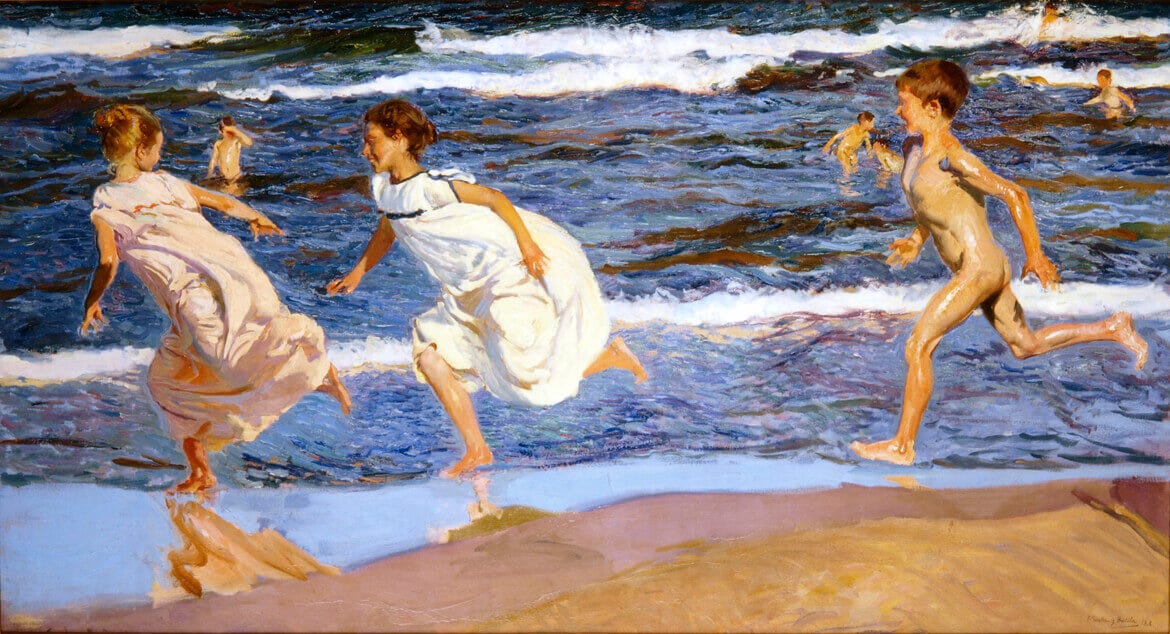
Of all Jane Austen’s heroines, the one whose pettiness irritates me most is Marianne Dashwood. Her constant disregard for other people’s feelings disguises itself as emotional intensity so excessive that it blinds her to anyone else’s suffering. No one else will ever be able to understand what beauty or true love is, because their perceptions are never deep enough nor their passions intense enough. And if the poor girl expresses remorse, it is only to feel even more sorry for herself. Marianne embodies drama. Drama spills out of her. And yet, what makes ‘Sense and Sensibility’ a literary masterpiece is not merely the contrast between Marianne and Elinor, but the fact that you believe Marianne feels everything she says, and suffers like no one else. That someone can drown in a cup of tea.
Of all Jane Austen’s heroines, the one I’m most like is Marianne Dashwood.
For some time now, I’ve been mentioning T in these letters I write, not quite knowing to whom. T, who says this or that. T is my therapist. I’ve been working with her since November, when what I called ‘my midlife crisis’ went into overdrive and all the juggling acts I’d been managing fell to the ground at once. T tells me that what I’m frantically searching for doesn’t exist, that this novelistic view of life I have is not only useless but harmful, and that my tendency towards perpetual dissatisfaction is the source of all evils. I must reassure my readers: these letters are not going to turn into an endless account of my progress in therapy. You won’t see me telling you how I took psychedelics to open my mind to my therapist, Harry Windsor-style. My relationship with T is much more mundane– just good old-fashioned therapy. I’m not going to tell you any more here than:
“You want more? More of what?”
“Well, just more. And that’s what I’m looking for. More.”
And whilst I don’t rule out taking ayahuasca, it seems T doesn’t have it on the menu… well, never say never.
I’ve always seen my constant quest as my greatest virtue, which takes me straight back to my A-level philosophy class when Mr Antonio quoted John Stuart Mill, saying, “It is better to be a human being dissatisfied than a pig satisfied; better to be Socrates dissatisfied than a fool satisfied.” I’ve always thought that believing myself to be lacking something intangible is what surely drives me to be better, that saves me from becoming someone who watches television in the afternoons, that protects me from a grey existence, from the horror of discovering that life might consist, for the most part, of Tuesday afternoons.
It’s one of life’s ironies that fate brought me to the quintessential ‘Tuesday afternoon’ country. If ‘hygge’ is Denmark’s trademark, Sweden’s is ‘lagom’. Lagom is one of those words for which there is no direct translation in other languages, at least not in any I know. If I type ‘lagom’ into Google Translate, it will tell me it means ‘just right’ in English. But it isn’t exactly ‘just right’; it goes a little further than that. The word conveys that exact point where everything seems to be in harmony, without ups and downs, without drama.
This concept of lagom both appeals and exasperates me in equal measure.
I understand why it exasperates me; why it appeals to me, not so much. There’s a quote by Virginia Woolf doing the rounds on social media–apparently a mistranscription from her diaries– which reads: “I have a deeply hidden and inarticulate desire for something beyond the daily life.” The first time I read it, I thought Virginia and I had so much in common. But that’s where the parallels end, because I neither write as she did nor do I wish to fill my pockets with stones and walk out to sea. I’d be quite content to die at 98, surrounded by my loved ones, preferably with a view of a garden. No drama required. They say one dies as one lives.
There is something deep inside me that longs for the peace of someone who looks out of the window hoping to see the sky, not the apocalypse. To look at the sky without experiencing the ecstasy of Saint Teresa. Thank God, age has tempered my emotions; at 17, I imagine being around me must have been exhausting. But I still carry the burden of thinking I know something about life that others don’t understand, and I catch myself thinking things like “Fools! You don’t know what this is all about” without realising that I’m the one who hasn’t a clue. There are also times when I fly into a rage because someone left an empty milk carton in the fridge. I find it hard to believe that Elizabeth Bennet would get angry over that.
Other times I look out of the window at the sky and I see only the sky, and that is enough. It is enough when I see CA reading a book, P playing the guitar or looking at the cobwebs on the other side of the window, E playing with his dinosaurs using my kentias as camouflage. I ask nothing more of my children than that they simply exist. I don’t imagine their future, nor do I wish to change anything about their past. They simply are; and in that being, they are enough. And I certainly don’t wish this Sisyphean punishment upon them: searching, knowing they will never find.
I’d like to be a bit more of a mother to myself.
To look at myself with the same kindness with which I watch my children playing.
After all, my children are not remotely dramatic, and yet I find them fascinating.

Children know how to do things that we adults have forgotten how to do. To stop searching for pearls and learn, once again, to pick up stones without wondering whether they are special.
I thought a lot about this poem by Rabindranath Tagore whilst writing these lines:
On the seashore of endless worlds children meet.
The infinite sky is motionless overhead and the restless water is boisterous. On the seashore of endless worlds the children meet with shouts and dances.
They build their houses with sand, and they play with empty shells. With withered leaves they weave their boats and smilingly float them on the vast deep. Children have their play on the seashore of worlds.
They know not how to swim, they know not how to cast nets. Pearl-fishers dive for pearls, merchants sail in their ships, while children gather pebbles and scatter them again. They seek not for hidden treasures, they know not how to cast nets.
The sea surges up with laughter, and pale gleams the smile of the sea-beach. Death-dealing waves sing meaningless ballads to the children, even like a mother while rocking her baby’s cradle. The sea plays with children, and pale gleams the smile of the sea-beach.
On the seashore of endless worlds children meet. Tempest roams in the pathless sky, ships are wrecked in the trackless water, death is abroad and children play. On the seashore of endless worlds is the great meeting of children.